Chapter 2.2
Preserving our Environment: Habitat and Vegetation
On this page, there are three key elements:
- Summary
- Full text for this section of the Neighborhood Plan
- Short survey
Summary:
Preserving habitat on Palm Island means working with nature, not against it. Native landscaping, healthy mangroves, stable dunes, and thriving sea grasses protect our shoreline, improve water quality, conserve water, and support the wildlife that depends on them.
Challenges to Habitat and Vegetation
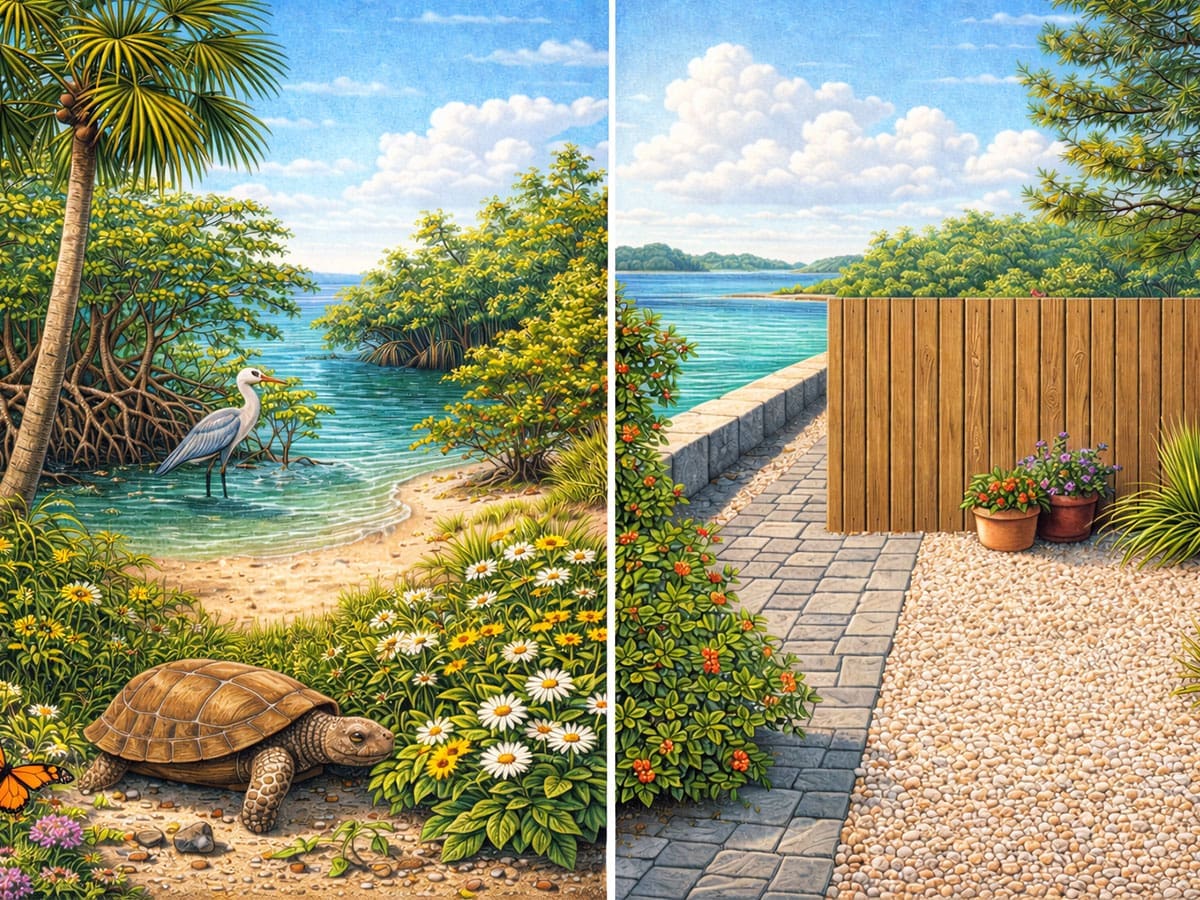
- Hardscaped Yards: Crushed shell, rock, and excessive pavers increase heat, disrupt soil health, and reduce natural drainage.
- Tree Loss and Clear-Cutting: Minimal local regulations make it easier to remove mature trees and natural vegetation.
- Invasive Species: Brazilian pepper, Australian pine, melaleuca, and other invasives crowd out native plants and harm wildlife.
- Shoreline and Marine Impacts: Mangrove removal, seawalls, dune damage, and declining sea grasses weaken natural storm protection and degrade water quality.
Recommendations
- Promote Native, Florida-Friendly Yards: Encourage reduced use of hardscape to conserve water and support habitat.
- Protect Trees, Mangroves, and Dunes: Strengthen local protections, enforce existing regulations, and support dune walkovers and sand fencing to reduce erosion and habitat loss.
- Restore and Maintain Natural Systems: Support invasive plant removal programs, protect sea grasses, and improve water quality through responsible yard practices and initiatives such as oyster gardens.
- Design for Wildlife Movement: Encourage tortoise-friendly landscaping and fencing that allows animals to move safely across the island.
- Enforce Existing Rules: Ensure beach driving restrictions, mangrove protections, and other environmental ordinances are upheld.
Full Version:
We encourage everyone to read the full version. While we did our best to summarize above, this full version offers much more nuance.
To preserve habitat, the best practice is to work with nature to create landscapes that conserve water, protect water quality and support local wildlife. Techniques such as xeriscaping and Florida-friendly planting, which involve selecting plants suited to the local environment, minimize the need for extra water, fertilizers and pesticides. Once established, these landscapes produce yards that are virtually maintenance-free. Removing invasive trees and plants also helps native vegetation thrive.
Mangroves are essential to the island’s ecosystem. They act as nurseries for marine life, provide nesting areas for birds, and form the foundation of the food chain. Mangroves also protect upland areas from storms, prevent erosion, and improve water quality.
Sand dunes play a crucial role by preventing erosion and storm damage, acting as natural buffers and stopping saltwater from intruding inland. The plants growing on dunes stabilize them by trapping sand and serving as windbreaks.
Sea grasses are vital to Florida’s marine environment. They help maintain water clarity, stabilize the sea bottom, offer shelter for marine life, and provide food for animals such as manatees and water birds.
Issues related to Habitat and Vegetation
- A yard of crushed shell, rock and pavers might seem to be convenient, but it dramatically increases heat retention, has negative soil impacts and has drainage and weed issues.
- Clear-cutting of vacant lots is a concern and County ordinances related to tree removal are minimal.
- Invasives crowd out native plants, seriously threaten Florida’s ecosystems and wildlife, and can cause allergic reactions in some people. The State of Florida prohibits planting Brazilian Pepper, Australian Pine and Melaleuca however, there are still plenty of these plants on the islands. BICI educates property owners about these invasive species in the hope that the owners will remove them.
- Some property owners have removed or excessively trimmed mangroves for better views or easier water access, leading to shoreline degradation. Despite state and local laws like the Mangrove Trimming and Preservation Act, enforcement has been insufficient to prevent unlawful destruction of these important plants.
- Properties on man-made canals are permitted to replace mangroves with sea walls, but while sea walls hold back erosion, they do not produce the additional environmental benefits that mangroves provide.
- Storms, droughts, fires, and human activity can destroy dune vegetation leading to dune loss. On the Island, both natural and renourished dunes are often damaged by people who fail to use designated beach access points, harming plants and reducing the dunes’ protective functions.
- Sea grasses are declining due to poor water quality, dredging, propeller damage, and speeding boats and jet skis.
Recommendations related to Habitat and Vegetation
- Promote green yards through xeriscaping (planting native vegetation and/or creating a “Florida-friendly” landscape) for improved habitat and water conservation.
- Encourage the use of water-harvesting systems.
- Explore ways to encourage the preservation of our tree cover.
- Promote minimal use of pervious materials (crushed shell and pavers) and discourage concrete except under buildings.
- Find incentives for homeowners to implement suggested behaviors.
- Support the program that removes invasive and exotic species from public rights-of-way and public land.
- Encourage gopher tortoise habitat by using appropriate native landscaping and using hardscape materials that do not interfere with tortoise forage patterns.
- Encourage the use of tortoise-friendly perimeter fences, in which the fence bottom sits above ground level allowing passage.
- State regulations regarding mangrove trimming and removal should be fully enforced.
- Investigate placing A.D.A. compliant dune walkovers at public beach accesses.
- Promote the use of existing public access or private community beach access to keep foot traffic off the dunes and encourage existing homeowners to put up DEP-approved dune walkovers for their own private use.
- Consider the use of semi-permeable sand fencing along the seaward face of the primary sand dunes to rebuild the dunes while minimizing impacts to nesting marine turtles
- Enforce the ordinance which restricts all motorized vehicular traffic on the beach except for authorized vehicles.
- Individuals can positively impact water quality by reducing the use of chemical pesticides and fertilizers in their yards and participating in programs that are proven to improve water quality, such as vertical oyster gardens.
Survey
Each head of household (up to two per household) may submit the form once. If you submit it more than once, only your most recent submission will count. This also means you can update your response later if you change your mind.