Chapter 4.4
Other Infrastructural Elements
On this page, there are three key elements:
- Summary
- Full text for this section of the Neighborhood Plan
- Short survey
Summary:
There are other infrastructural elements worth noting:
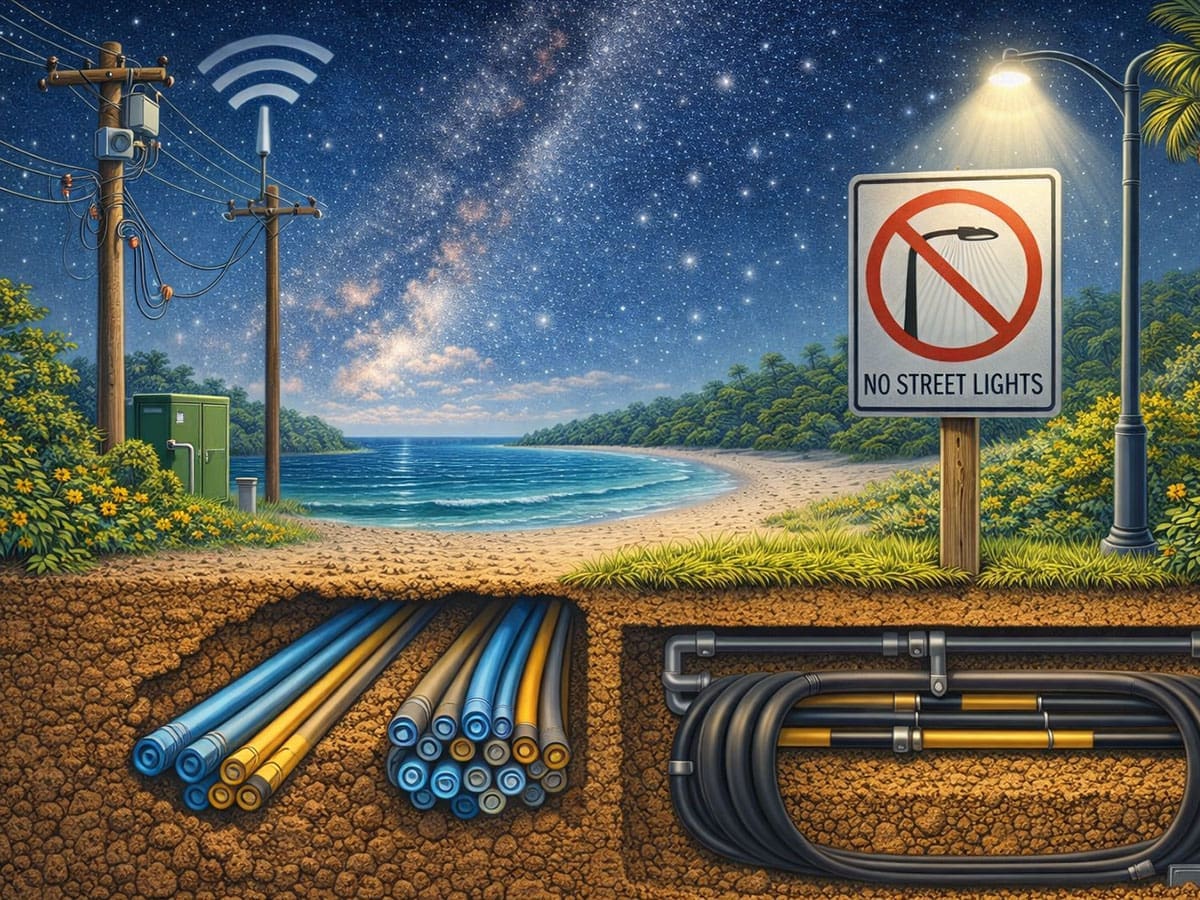
- Internet: The Island has several internet providers, but poorly installed and maintained cables and wires can cause service issues, road problems, and even block waterways.
- Street Lighting: The Island has very little street lighting to protect wildlife and keep the night sky visible, but there is concern the County could add more lighting in the future.
- Underground Utilities: Many utilities on the Island are underground, but FPL recognizes that some are still above ground, making them more vulnerable to damage during storms.
We recommend:
- Make sure all utilities are installed and maintained properly to avoid damage and service issues.
- Keep the Island dark at night by not adding streetlights.
- Put all utility lines underground to better protect them from storms.
Full Version:
We encourage everyone to read the full version. While we did our best to summarize above, this full version offers much more nuance.
Beyond transportation and water/wastewater considerations, there are other infrastructural elements that merit assessment.
Internet. Internet service on the Island is provided through several service providers. Presently two companies use hard-wired infrastructure for internet access, while others use wireless Wi-Fi connectivity.
Street Lighting. As expressed in the community’s Vision Statement, Islanders value the absence of streetlights to prevent light pollution. It is stated that “the dark nighttime sky is crucial for protecting sea turtles during nesting season and allows us to see the Milky Way from our yards.” At present, there is minimal street lighting on the Island, mostly low-level lights on private roads in Island subdivisions.
Underground Utilities. On large portions of the Island, utilities are buried underground however some infrastructure remains above ground. Florida Power and Light recognizes that electrical infrastructure should be buried to improve grid reliability during severe weather. They have implemented a policy of “hurricane storm hardening” as part of their storm-secure underground program. However, at this time the program has not been implemented on the Island.
Issues related to Other Infrastructural Elements
- Lack of maintenance and proper installation of some underground and above-ground infrastructure, including internet cables, electrical wires, water pipes, etc. – creates a series of issues in the community, such as:
- Problems with road-grading.
- Disruption of service due to damage to infrastructure by contractors.
- Lines crossing waterways inhibiting navigation and causing damage.
- The Island is presently outside of the Charlotte County Public Works Lighting District, which indicates the County has no intention of installing street lighting. However, the County could potentially extend the District to include the Island and effect changes to or reinterpretations of the existing regulations to do so.
- Island infrastructure is vulnerable during storms and severe weather events.
Recommendations related to Other Infrastructural Elements
- Promote adherence to the existing regulations for infrastructure, which includes authorized permitting, installation to code and proper maintenance.
- To uphold the intent of the Vision Statement, challenge any expansion of the Public Works Lighting District, which could result in the introduction of street lighting to the Island.
- Prohibit any installation of street lighting through alternative means outside of the established boundaries of the Lighting District.
- Support the burial of all utilities Island-wide to minimize storm impact and improve post-disaster recovery.
- Encourage Florida Power and Light to make Island conversion to underground utilities a priority and coordinate with the storm-secure underground program to ensure that provisions are made for interruptions of service and public safety.
Survey
Each head of household (up to two per household) may submit the form once. If you submit it more than once, only your most recent submission will count. This also means you can update your response later if you change your mind.