Chapter 5.2
Hurricane Evacuation and Disaster Planning
On this page, there are three key elements:
- Summary
- Full text for this section of the Neighborhood Plan
- Short survey
Summary:
- Knowing when and how to evacuate
Residents must stay informed, but not everyone signs up for emergency alerts, which can lead to confusion during a storm. - Limited evacuation options as the island grows
The island relies on a single ferry for evacuation, which may stop early in unsafe weather, and as more people live here, evacuations could take longer and become more difficult. - No emergency services during storms
In a mandatory evacuation, fire and EMS services leave the island, and help is not available until it is safe to return. - Challenges after the storm
Residents may have to wait to return, deal with long power outages, and handle unsafe situations like generators or boil-water notices.
We recommend:
- Islanders should sign up for AlertCharlotte to receive real-time emergency updates instead of calling for information.
- Everyone should have a plan in place ahead of time so you can act quickly and safely when a storm is coming.
- Find ways to improve communication after storms so residents clearly understand boil-water notices and recovery steps.
Full Version:
We encourage everyone to read the full version. While we did our best to summarize above, this full version offers much more nuance.
Island residents have chosen to live in a high hazard area and must take individual responsibility for their decisions concerning their personal safety and the safety of their families and homes. In the event of severe weather, residents are responsible for keeping abreast of the storms as they develop and knowing when mandatory evacuation orders are issued.
Hurricanes have caused and will continue to cause large-scale evacuations in the future. Evacuation status is determined by Charlotte County Emergency Management (CCEM), which controls evacuation and re-entry procedures. Palm Island Transit (PIT) takes its direction from CCEM in the event of a declared emergency.
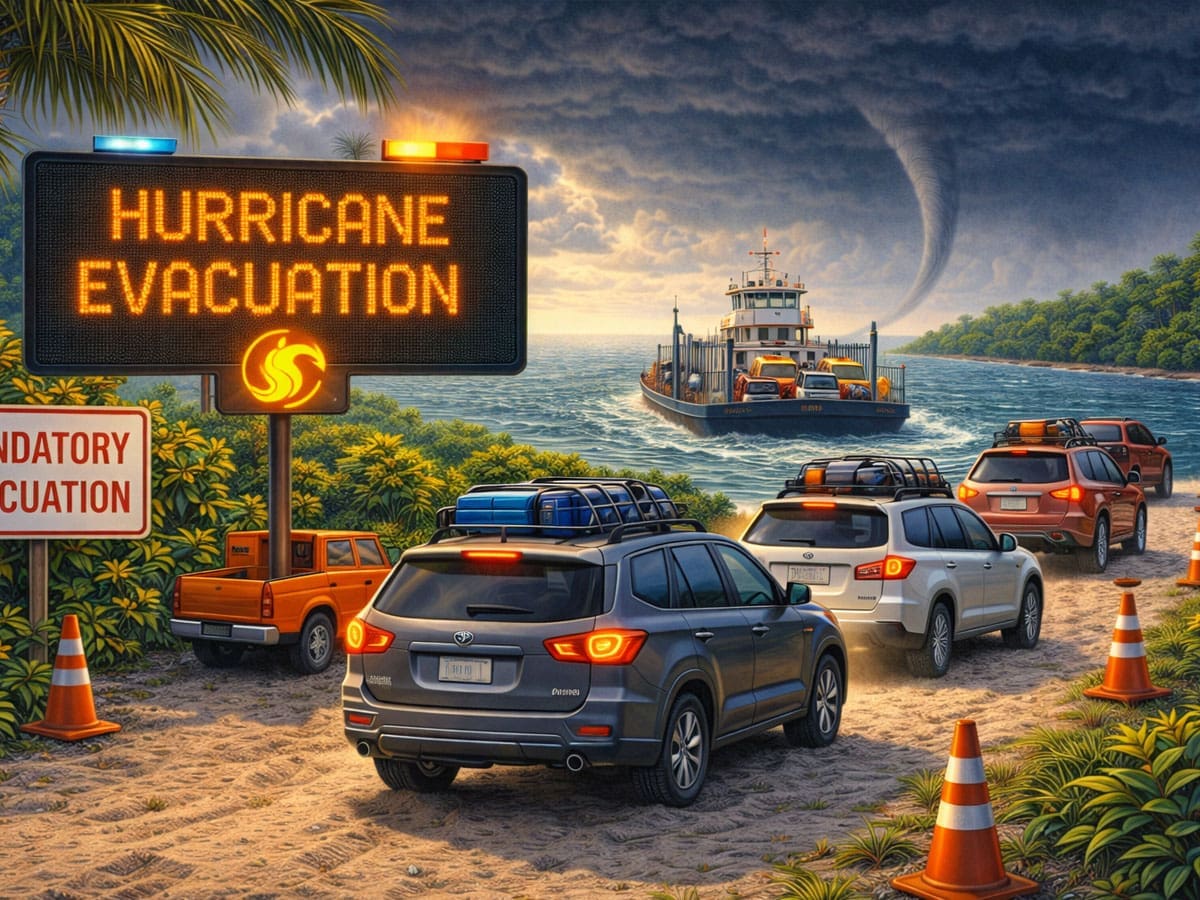
The Island lacks multiple egress points, and so residents and visitors do not have a choice regarding evacuation routes. Unless residents or visitors take their private boats to the mainland, Palm Island Transit offers the only transportation – by ferry – off of the island. Due to the uncertainty associated with a major storm, residents and visitors are asked to leave the island as soon as possible when notified of a mandatory evacuation.
In addition, Charlotte County Fire and EMS determines when the emergency equipment on the island needs to be removed. Residents who choose to stay on the island must understand that there will be no emergency fire or medical services from either Station 10 or the mainland until the “all clear” is given and Station 10 personnel and equipment are back on islands.
Issues Related to Hurricane Evacuation and Disaster Planning
Areas of concern related to hurricanes include disaster emergency communication, ferry evacuation and reentry procedures, long-term power outages and effects on the island’s water utilities.
- While information is available from CCEM, not all residents participate in the available programs for receiving emergency communications.
- Because there are fewer full-time residents on the island during hurricane season and visitors usually cancel their plans when advised of a potential hurricane, evacuation has been orderly. However, this may not be the case when the island is more built out and there are more year-round residents.
- The ferry evacuates people and vehicles to the mainland until a predetermined stopping time as established by PIT and CCEM. However, wind and water conditions dictate ferry operation. PIT must discontinue operations when the wind reaches a level where it is no longer safe to operate the vessel, which could occur prior to the established time.
- Following a disaster event, property owners are anxious to return to their homes to evaluate damage and make a recovery plan. However, re-entry can only begin when CCEM signals the “all clear”.
- In the event of a long-term power failure, some residents use methods which are potentially unsafe, such as overloaded extension cords and improperly vented generators.
- Property owners need to be notified of the boil-water requirements in the event of a water shut-down.
Recommendations for Hurricane Evacuation and Disaster Planning
- Residents should refrain from calling CCEM for information about ferry operations.
- Property owners should sign up online for “AlertCharlotte”, an emergency notification system that sends alerts via text, email and phone calls regarding severe weather, road closures and evacuations. This will provide the most timely and accurate information.
- Hurricane preparedness is not unique to the Island, so residents should educate
- Request that the local water utility provider improve communication to residents when boil-water precautions are necessary.
Survey
Each head of household (up to two per household) may submit the form once. If you submit it more than once, only your most recent submission will count. This also means you can update your response later if you change your mind.