Chapter 2:
Preserving our Environment
Executive Summary
Environmental stewardship emerged as one of the most unified themes across surveys, written comments, and the two‑day public workshops. Residents expressed strong support for protecting the Island’s wildlife, preserving natural habitat, and maintaining high water quality, while emphasizing that solutions must be practical, science-driven, implemented through community education about the issues and their remedies, and respectful of private property rights. The community consistently favored approaches that strengthen awareness and encourage voluntary best practices rather than adding new regulations or creating an HOA‑like environment.
Wildlife protection received overwhelming support. Residents want clearer communication about sea turtle, shorebird, manatee, and gopher tortoise protections, and they emphasized that renters, contractors, and new homeowners often lack basic environmental knowledge. Strategic “No Wake” and “Caution: Manatee” signage at canal entrances and on private docks was widely supported, along with participation in iguana‑control programs and efforts to reduce light pollution through Dark Sky practices. At the same time, residents expressed concern about excessive signage and strongly preferred targeted education over visual clutter.
Habitat preservation was another major priority. Residents value native vegetation, oppose clear‑cutting, and support removal of invasive species. They favor native and Florida‑friendly landscaping, dune protection, and mangrove stewardship, but want these practices encouraged not mandated. Many stressed that environmental guidance should not restrict the ability to build a single‑family home or impose uniform landscaping requirements. The community supports wildlife‑friendly property design when framed as voluntary best practice and balanced with pet safety and pool protection.
Water quality generated some of the strongest consensus in the chapter. Residents want independent, Island‑specific water testing, detailed publicly available reporting, and long‑term monitoring to guide decision‑making. They also support education on simple practices that reduce nutrient runoff and protect seagrasses and shoreline habitat. Interest in community‑based initiatives, such as vertical oyster gardens and shoreline vegetation restoration, was high.
Across all environmental topics, residents emphasized the importance of education, transparency, and practical implementation tailored to the realities of a bridgeless barrier island. They want to protect the Island’s natural resources while preserving its quiet, low‑density character and maintaining flexibility for individual property owners.
2.0 Introduction
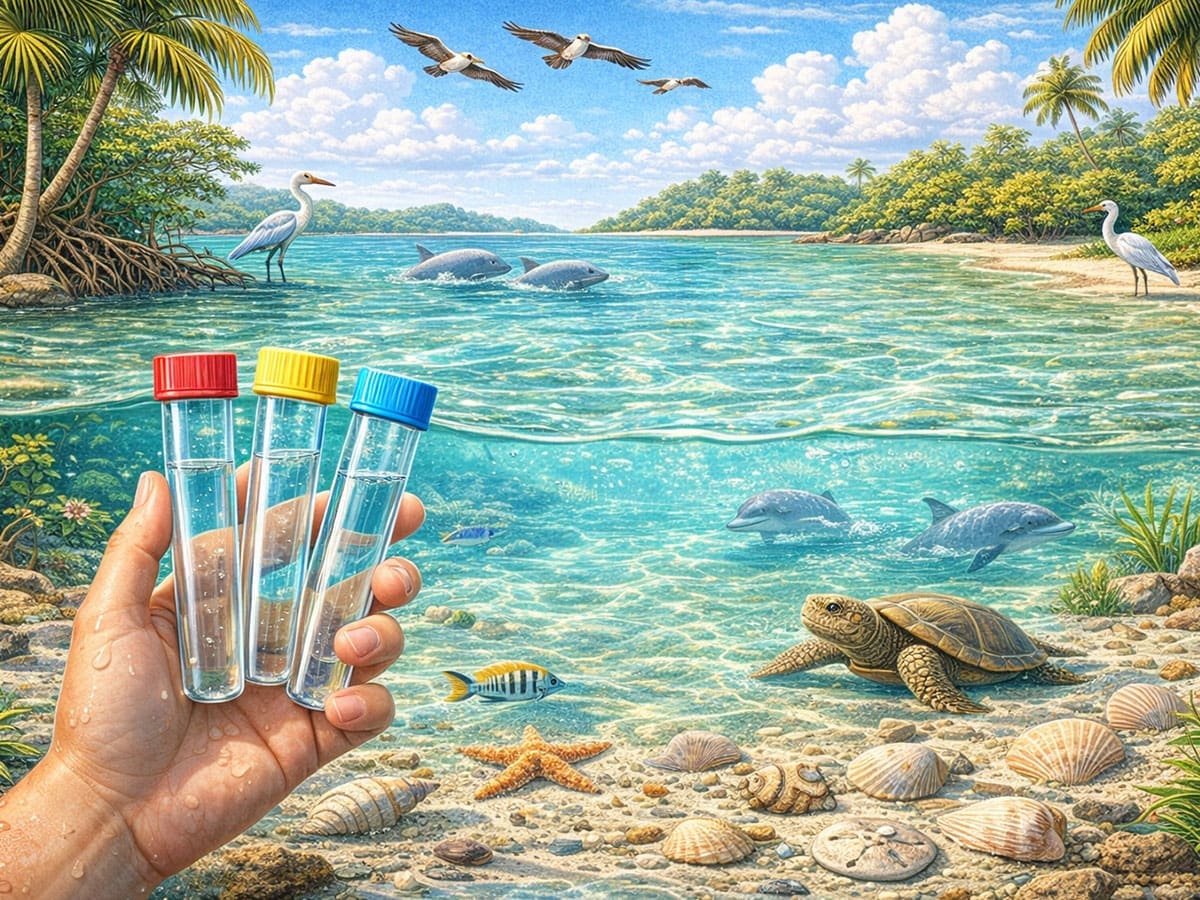
Palm Island contains some of the most ecologically sensitive habitats in Charlotte County, supporting endangered wildlife, fragile dune systems, wetlands and vital mangrove shorelines. Protecting these natural resources is essential to preserving the Island’s character, environmental health, and quality of life. This chapter outlines the community’s shared priorities for wildlife protection, habitat stewardship, and water quality, emphasizing practical, education‑first strategies that balance environmental responsibility with respect for individual property rights.
2.1 Wildlife Protection
The Island supports a rich diversity of wildlife, including several endangered and threatened species whose survival depends on the Island’s remaining natural habitats. The protection of our wildlife is dependent upon preservation of green space and the management of water quality and light pollution. Coastal wetlands and mangrove shorelines filter pollutants, buffer storm surge, and provide essential habitat for wading birds, fish, and marine life.
Sea turtles nest on the Island’s beaches, but artificial lighting, beach furniture, vehicles, and human disturbance threaten their survival. Lights on Island properties and the ‘urban glow’ from the mainland have lured hatchlings to their deaths. Shorebirds face similar pressures from habitat loss, dogs off leash, and unintentional disturbance. Manatees and dolphins rely on slow‑speed waterways, yet enforcement of No Wake zones remains inconsistent. Gopher tortoises — an isolated Island population — face habitat loss, road mortality, and pressure from development. Other native species such as bats, bobcats, snakes, opossums, and pollinators depend on intact habitat and reduced human impacts.
Protecting wildlife is essential to preserving the Island’s ecological integrity and the natural character valued by residents and visitors.
Community Input
Residents overwhelmingly support wildlife protection and want clearer education for renters, contractors, and new homeowners. Survey results show strong agreement on improving awareness, enforcing existing laws, protecting gopher tortoises, and adding targeted No Wake/Manatee signage at canal entrances. Public meeting participants emphasized desire for minimal signage, consistent enforcement of current regulations, and practical guidance on Dark Sky practices. The community favors solutions that protect wildlife without altering the Island’s natural, low‑key character.
Issues
- Limited public awareness of wildlife rules among renters, contractors, new homeowners, and some residents.
- Inconsistent enforcement of existing wildlife protection laws.
- Sea turtle nesting threatened by artificial lighting, beach furniture, and nighttime beach activity.
- Shorebird nesting areas disturbed by dogs off leash and uninformed beachgoers.
- Manatees and dolphins endangered by speeding boats and insufficient No Wake signage at key waterway entrances.
- Gopher tortoise habitat declining due to lot clearing, road mortality, and limited on‑Island relocation options.
- Invasive iguanas damaging vegetation and displacing native species.
- Light pollution affecting wildlife and reducing natural night sky visibility, with unclear guidance for residents.
Recommendations
- Provide targeted education for renters, rental managers, contractors, and new homeowners using pre‑arrival materials and simple guidance sheets.
- Coordinate with county and state agencies to increase enforcement visibility while maintaining an education‑first approach.
- Promote turtle‑friendly lighting, nighttime blind‑closing, and removal of beach furniture after sunset.
- Support shorebird protection through seasonal awareness campaigns and volunteer coordination.
- Install strategic No Wake and Manatee Caution signs at canal and lagoon entrances and other high‑traffic areas.
- Encourage on‑Island gopher tortoise relocation, population tracking, and tortoise‑friendly fencing compatible with pet safety.
- Promote participation in iguana removal programs and provide information on approved methods.
- Offer clear, simple Dark Sky guidance on lighting fixtures, shielding, and nighttime practices.
2.2 Habitat and Vegetation
The Island’s dunes, mangroves, native vegetation, and seagrasses form the foundation of its ecological health. Best practices involve working with nature to create landscapes that conserve water, protect water quality and support local wildlife. Florida‑friendly landscaping and xeriscaping reduce irrigation needs, minimize fertilizer and pesticide use, and create low‑maintenance yards that support native species.
Mangroves are especially critical, serving as nurseries for marine life, stabilizing shorelines, and improving water quality. Dunes protect against storm surge and erosion, while dune vegetation traps sand and maintains dune structure. Seagrasses support manatees, fish, and water birds, and help maintain water clarity.
Native habitat is threatened by clear‑cutting, lot scraping, invasive species, excessive hardscape and mangrove removal or improper trimming. County ordinances related to lot clearing are minimal. Invasive species such as Brazilian pepper and Australian pine crowd out native plants and degrade habitat. Inappropriate beach access damages dunes and vegetation. Seawalls do not provide the benefits of natural shoreline protections.
Preserving habitat requires a combination of education, incentives, and enforcement of existing regulations.
Community Input
Residents support native landscaping, invasive species removal, and mangrove protection, but prefer education and voluntary adoption over new mandates. Many expressed concern about clear‑cutting and loss of tree cover, while others emphasized balancing habitat protection with reasonable property rights. Hardscape reduction received mixed feedback—supported in principle but resisted when perceived as restrictive. Overall, residents favor guidance, examples, and incentives rather than prescriptive rules.
Issues
- Clear‑cutting of lots removes mature vegetation, reduces wildlife habitat, and increases erosion.
- Invasive species (Brazilian pepper, Australian pine, melaleuca) continue to spread and displace native plants.
- Mangrove trimming and removal for views or access degrade shorelines, habitat and storm protection.
- Dune vegetation damaged by foot traffic, improper access, and storm impacts.
- Excessive hardscape increases heat retention, reduces habitat, and affects drainage.
- Homeowners lack guidance on landscaping choices that support habitat and water quality.
- Seawalls on man‑made canals replace natural shoreline functions and reduce ecological benefits.
Recommendations
- Promote Florida‑friendly landscaping through voluntary guidance, examples, and homeowner/contractor education.
- Encourage pre‑construction vegetation assessments to preserve mature trees and native vegetation where feasible.
- Support invasive species removal through education, volunteer programs, and coordination with local conservancies and county agencies.
- Strengthen mangrove protection by promoting awareness of state regulations and proper permitting.
- Protect dune systems by encouraging use of designated access points and dune walkovers, including ADA‑compliant options.
- Provide education on pervious alternatives to hardscape, emphasizing voluntary adoption.
- Encourage wildlife‑friendly property design that supports gopher tortoise movement while allowing for pet and pool safety.
- Promote water‑conserving practices such as rain barrels, reduced fertilizer use, and native plantings.
2.3 Water Quality
The Island lies within the Lemon Bay, Cape Haze, Gasparilla Sound, and Charlotte Harbor Aquatic Preserves — estuaries of statewide ecological significance. Water quality affects wildlife, recreation, public health, and the Island’s long‑term resilience. Water quality in the entire area is impacted by larger natural events beyond our immediate control, including rainfall, runoff, red tide, shoreline changes, and storm events.
Development increases pressure on water quality through nutrient runoff, vegetation loss, and increased boat traffic. Seagrass decline, fish kills, and algal blooms are regional concerns. Maintaining healthy water requires coordinated monitoring, data collection, and public education
Coordinated sampling programs, with input from local, state, and federal authorities, can help identify trends, guide community action, and support advocacy for regional improvements.
Community Input
Property owners strongly support independent water testing and transparent reporting. Many emphasized the need for Island‑specific data rather than relying on regional assumptions. Concerns included nutrient runoff, septic impacts, and long‑term water quality trends. Participants favored education on simple practices—reduced fertilizer use, proper vegetation management, and participation in water‑quality programs. The community wants credible data, clear communication, and practical steps to protect water quality.
Issues
- Water quality affected by regional factors such as rainfall, runoff, red tide, and storm events.
- Nutrient runoff from landscaping contributes to water degradation.
- Loss of shoreline vegetation reduces natural filtration and increases erosion.
- Lack of Island‑specific water quality data limits understanding and advocacy.
- Boat traffic and propeller scarring damage seagrasses and disturb marine life.
- Limited public awareness of simple water‑protective practices.
Recommendations
- Establish an Island‑specific water quality monitoring program with local agencies or volunteer groups.
- Publish regular (annual or semi‑annual) water quality summaries for residents.
- Promote fertilizer‑free and pesticide‑free landscaping practices and provide alternatives.
- Encourage preservation of shoreline vegetation and natural stabilization methods.
- Support continued Health Department beach testing and share results with the community.
- Educate residents and contractors on water‑protective practices, including reduced chemical use and stormwater awareness.
Promote participation in water‑quality improvement programs such as vertical oyster gardens and seagrass protection initiatives.
2.4 List of Environmental Priorities
Islanders consistently prioritize wildlife protection, habitat preservation, and water quality, with a strong preference for education‑first approaches.
- Strengthen wildlife protection through improved public awareness, consistent enforcement, and targeted education for renters, contractors, and new homeowners.
- Preserve native habitat and vegetation by encouraging Florida‑friendly landscaping, reducing clear‑cutting, and supporting removal of invasive species.
- Protect critical coastal systems — mangroves, dunes, wetlands, and seagrasses — through education, voluntary best practices, and coordination with county and state agencies.
- Improve water quality with Island‑specific monitoring, transparent reporting, and community education on nutrient reduction and shoreline stewardship.
- Reduce light pollution by promoting practical Dark Sky guidance that protects wildlife while maintaining resident safety and comfort.
- Use signage strategically — placing No Wake and Manatee signs only where needed to ensure safety without creating visual clutter.
- Promote voluntary, property‑owner‑friendly solutions that balance environmental protection with flexibility and respect for individual rights.
- Emphasize education over regulation, ensuring environmental goals are achieved through awareness, collaboration, and community stewardship rather than mandates.
2.5 Overall Conclusions
Community input reflects broad alignment with the environmental goals of the Neighborhood Plan. Residents want to protect the Island’s unique ecosystems while maintaining its low‑key, natural character. They favor solutions that are practical, minimally intrusive, and grounded in education, stewardship, and shared responsibility. The strongest message is clear: protect the Island’s environment in ways that preserve the Island’s identity and quality of life.