Chapter 2.1
Preserving our Environment: Wildlife
On this page, there are three key elements:
- Summary
- Full text for this section of the Neighborhood Plan
- Short survey
Summary:
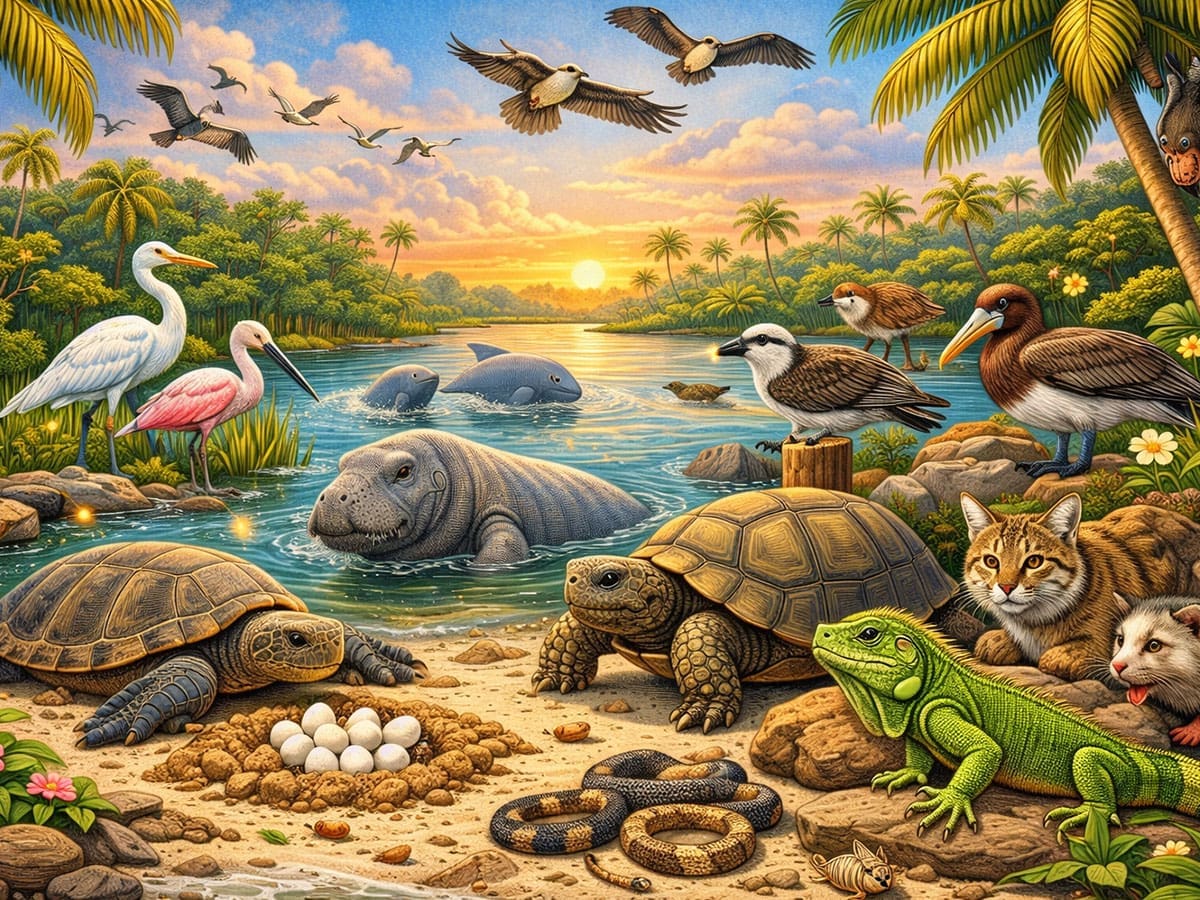
Palm Island is home to many unique and vulnerable animals, and each faces specific challenges. Protecting them means preserving habitat, reducing human impact, and enforcing existing rules.
- Sea Turtles – Threatened by beachfront lighting, development, and disturbance of nests.
- Shorebirds – Fewer nests due to habitat loss and disruption from people and pets.
- Manatees – At risk from boat strikes, pollution, and weak enforcement of slow-speed zones.
- Gopher Tortoises – Losing habitat and increasingly harmed by traffic and development.
- Other Native Wildlife – Affected by shrinking green space and loss of natural yards.
- Feral Iguanas – Invasive species that damage vegetation and disrupt native wildlife.
Recommendations:
- Education and Awareness – Encourage residents, property owners, renters, and visitors to be responsible stewards of the island by improving education about environmental rules, providing clear information in rental units, and increasing public awareness of wildlife protections.
- Protection and Enforcement – Enforce existing wildlife ordinances, support and participate in established protection programs, and ensure island design allows animals to move safely and freely throughout their natural habitat.
Full Version:
We encourage everyone to read the full version. While we did our best to summarize above, this full version offers much more nuance.
The Island is home to numerous animal species, many of which are endangered or threatened. The protection of our wildlife is dependent upon preservation of green space and the management of water quality and light pollution.
Coastal wetlands, mangroves and tidal marshes improve water quality, act as storm buffers and provide food and shelter for coastal wading birds, fish and other marine life.
Light pollution impacts wildlife by altering nocturnal environment, leading to disorientation, disrupted breeding, altered migration and increased predation risk. Programs like the “Dark Sky Initiative” and the Sea Turtle Lighting District requirements provide a path to reduce excessive lighting.
The preservation of wildlife is essential not only to maintain the quality of life enjoyed by residents and visitors but also to fulfill our obligation as caretakers of unique and vanishing habitat and wildlife.
Issues regarding the Preservation of Wildlife:
Sea Turtles
Our beaches are nesting areas for several species of endangered sea turtles. The sea turtles that have returned to nest year after year have encountered dramatic changes. The wide, expansive beaches have come and gone with erosion, storms and re-nourishment. Houses have been constructed along the beachfront where turtles used to nest. Lights on Island properties and the “urban glow” from the mainland have lured hatchlings to their deaths. Violations of federal and local laws threaten turtle nesting. These violations include disturbing turtles and their nests, operating motorized vehicles on the beach, and camping and campfires on the beach. Temporary structures, furniture or boats left on the beach between sunset and sunrise are also prohibited. There are also standards for lighting and coastal construction during nesting season. Violations of these regulations threaten sea turtle nesting on the Island.
Shorebirds
Our islands serve as vital habitats for many bird species, including thousands of migratory birds. Some are listed as “threatened” or “species of special concern” by the Florida Fish and Wildlife Commission (FWC), and all migratory shorebirds are protected under the Federal Migratory Bird Treaty Act. Additional protections apply to endangered or threatened species under federal and state laws.
While some nesting areas are marked off, many remain unprotected. Major threats include habitat loss, human and pet disturbances, and reduced migratory stopovers. Shorebirds nest directly in the sand, making the nests hard to see and easy to damage. Uninformed visitors often unintentionally harm birds by chasing them or allowing dogs to run free. While volunteers monitor nesting sites from February 1 to August 31, there is still more to be done to protect the shorebirds.
Manatee Protection
The West Indian manatee, a year-round resident in the waters around the islands is an endangered species protected under federal and state law. Speeding boats and other watercraft as well as red tide, monofilament line, hooks and other litter in the water are responsible for the death of many of these creatures each year. Our island waters are restricted to slow speed and/or no wake travel to protect resident manatees and dolphins as well as our fragile shorelines and sea grasses. Enforcement of these zones has been identified as a continuing problem.
Gopher Tortoises
Our islands provide habitat for a diminishing population of protected gopher tortoises. Their biggest threat is loss of habitat. Currently, owners can pay mitigation fees which allow them to clear-cut lots after relocating the gopher tortoises that are found there. The loss of habitat on the Island not only hinders tortoise relocation for construction but also leads to increased road deaths as they use the roads in their foraging patterns. Increased traffic and speeding on the roads contribute to more dead and injured tortoises. The remaining island gopher tortoises form a discrete population that can maintain their numbers only on the island. If they are not fully protected, in time they will vanish.
Other Native Wildlife
Diminished habitat impacts other Island wildlife such as birds, bats, bobcats, bees, snakes, opossums and other Island habitants.
Feral Iguanas
Iguanas have grown to be an alarming problem on our islands. The iguanas are not native to the United States and are “invasive” species and can often cause damage to the ecosystem. Vegetation can be decimated by one large iguana taking up residence in a yard. Iguanas can also cause problems by appropriating gopher tortoise burrows. Their feces are odiferous and may harbor Salmonella bacteria. Large adults may be aggressive towards people and pets if they feel threatened.
Recommendations regarding Preservation of Wildlife:
- Support all efforts to encourage and educate current and future stakeholders and visitors to become responsible stewards of their environment.
- Encourage all rental units to have an informational package regarding environmental information and ordinances.
- Enforce the penalties for violation of ordinances relating to sea turtles, manatees, shorebirds, and gopher tortoises.
- To control potential damage caused by pets on the beach, enforce state beach regulations and local “leash laws” and “poop scoop” laws.
- Work with Charlotte County Natural Resources to protect nesting sea turtles and enforce Charlotte County Ordinance Article XII, Sea Turtle Protection.
- Improve public awareness of regulations that protect shorebirds during nesting season.
- Place “No Wake” and “Caution: Manatee” signs in ALL lagoons and canals and enforce the navigation laws/ordinances.
- Pursue establishing a site for relocating gopher tortoises on the Island.
- Conduct a gopher tortoise census of the current tortoise population and track known fatalities.
- Recommend all island perimeter fences to have space at the bottom for gopher tortoise travel.
- Encourage participation in the existing program to eliminate the iguana population on the islands.
- Protect wildlife by becoming a “Dark Sky” community.
Survey
Each head of household (up to two per household) may submit the form once. If you submit it more than once, only your most recent submission will count. This also means you can update your response later if you change your mind.