Chapter 3.1
Navigation and Coastal – The Waterways
On this page, there are three key elements:
- Summary
- Full text for this section of the Neighborhood Plan
- Short survey
Summary:
Our waterways are central to our daily lives and require thoughtful balance between use, shoreline protection, and long term sustainability.
- Stump Pass and the Intracoastal – Heavy boat traffic and necessary dredging must be carefully managed to maintain safe navigation while protecting sensitive estuary habitats and complying with state regulations.
- Interior Waterways – Our canals and bays may need periodic dredging to stay navigable, but there is no public funding source for ongoing maintenance, storm cleanup is limited to debris only, and any larger dredging effort would require property owners to agree on both the need and how to pay for it, with additional challenges around permits and spoil disposal.
- Docks – While most owners have private dockage, some rely on shared access and current zoning prevents docks on vacant lots without a primary structure, and adding public marinas could further strain the Island’s already limited infrastructure.
- Boating Regulations – Existing boating laws covering speed, wake, safety, and manatee protection are often ignored, creating safety risks for ferry crossings and other boaters and causing environmental damage, with the primary issue being limited on-the-water enforcement rather than a lack of regulations.
Recommendations
- Property owners on interior waterways should agree on maintenance needs and create a shared funding plan for dredging if needed.
- Support allowing non commercial docks on vacant lots.
- Increase enforcement of waterway regulations.
Full Version:
We encourage everyone to read the full version. While we did our best to summarize above, this full version offers much more nuance.
The waterways in and around the Islands, both natural and man-made, are critically important to Island life. They surround the community and are used by stakeholders for recreational boating, fishing and access to their properties by either ferry or personally owned boat. There is an ongoing need for balancing navigation and recreational requirements, shoreline protection, and environmental preservation.
- Stump Pass and the ICW
The Intracoastal Waterway (ICW) is a man-made channel that goes through Lemon Bay, connecting Gasparilla Sound to Venice. The nearest pass to access the Gulf of Mexico is at Stump Pass, which is at the northernmost end of the Island. The ICW experiences heavy recreational boat traffic from private docks and commercial marinas, and the area adjacent to the ferry landings is a narrow stretch between Knight and Don Pedro islands and the mainland.Periodic dredging is required for maintenance of both the ICW and Stump Pass. Lemon Bay’s protected estuary, with habitats like seagrass beds and oyster bars, is closely monitored during these projects to ensure resource protection. Generally, dredging outside of the footprint of existing design specifications for channels and passes is prohibited by FDEP within Aquatic Preserves, but may be allowed if it can be shown to have less impact on submerged resources.
There is currently a plan in place for Stump Pass maintenance which is funded by a special taxing unit inclusive of Islanders and properties in the greater Lemon Bay area.
- Interior Waterways
The Islands’ canals, bays, lagoons and navigable channels (excluding the ICW and the Gulf of Mexico) are under various jurisdictions. Charlotte County is not responsible for maintenance dredging and residents are not paying into a taxing unit to be used for dredging. FEMA has varied on its position about clearing waterways following a storm. Typically, they have limited their involvement to ‘debris’ removal that could otherwise constitute a public hazard, but not shoal removal.The DEP may approve maintenance of waterways if needed and if proper disposal practices are followed. On islands like Knight and Don Pedro, spoil disposal is challenging due to limited space, but communal disposal sites and periodic removal by barge can help. Clean, dried spoil may also be used locally to renourish the beach or for road maintenance.
Property owners may apply for an individual dredging permit to maintain the depth at their dock, but this will not resolve varying depths throughout the access channels.
- Docks
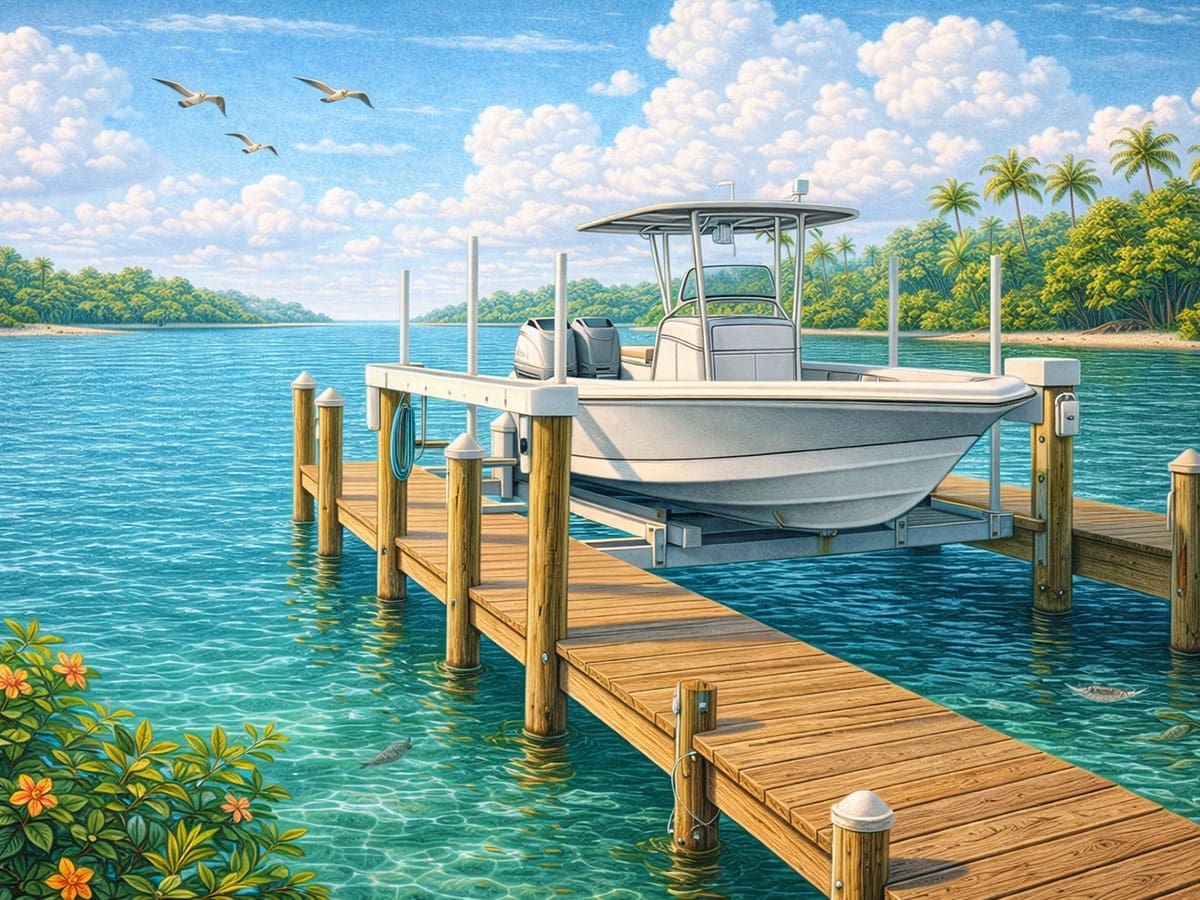
Private dockage is available to most property owners. There are some properties on the Island that cannot accommodate a dock and only have access to common dockage. Issues with common docks need to be resolved by the affected property owners. If there are any land-locked properties on the Island, those owners may have future interest in the potential to purchase a boat slip or docking rights on the Island.At this time, there are no public marinas or public docks for general use on the Island. As discussed in Chapter 2, the Island’s infrastructure is fragile and becoming more burdened as these islands build out. The addition of public marinas requiring water, power, sewage disposal, garbage disposal and other services may not be in the public interest.
- Boating Regulations
Boating regulations that address speed, rules of the road, responsibility for wake, lights on at night, safety equipment and environmental protection are frequently ignored. In particular, the threat to the environment from speeding watercraft is immense. Both the Florida Fish and Wildlife Commission’s Marine Patrol and Charlotte County Sheriff have the authority to enforce boating regulations and manatee protection rules and to address other problems on the water. Jet skis and other personal watercraft are included in the definition of “boats” under maritime law and by the US Coast Guard.
Issues regarding the Waterways
- Interior waterways may require periodic dredging and currently there is no funding mechanism for overall maintenance. If maintenance dredging is desired on an entire channel, consensus must be established among property owners as to the need and how it will be funded.
- Boaters on the ICW who do not adhere to US Coast Guard regulations regarding speed and rights of way are an on-going problem for boaters traversing the ICW to and from the mainland and also for the ferry crossings. On several occasions, the ferry has been forced into the shoreline when trying to avoid boaters. The issue is not one of regulation but of the resources available on the water to enforce the existing regulations.
- In 2013 when the County updated the Island to BBI zoning, they did not include the allowance for the customary building of docks on vacant lots that have no “primary structure”. This creates a significant problem for property owners who wish to build docks where there is no primary structure.
Recommendations regarding the Waterways
- Property owners living on interior waterways should be responsible for creating consensus regarding maintenance. Once consensus is established, they may have the option to create an MSBU taxing unit for the specific purpose of funding the dredging.
- Monitor the presently ongoing administrative process that will allow the permitting of non-commercial boat docks as principal uses and structures on vacant lots.
- Increase the resources in and around the Island to enforce waterway regulations.
Survey
Each head of household (up to two per household) may submit the form once. If you submit it more than once, only your most recent submission will count. This also means you can update your response later if you change your mind.